
Mogadishu News: January 2009
January 2009 sits in Somali political history like a hinge between two chapters. The long Ethiopian military presence that had shaped Somali politics since the intervention of 2006 was coming to an end, and the political machinery built around that period suddenly looked fragile. Negotiations that had been dragging on for months in Djibouti were finally producing visible institutional consequences.
Inside Mogadishu the atmosphere around politics felt strange — not explosive, not calm either. Just shifting. Somali leaders, parliamentarians, and mediators were trying to stitch together a functioning national government again, piece by piece, argument by argument.
For the capital the month didn’t revolve around a single dramatic announcement. No grand speech that changed everything overnight. Instead the political news unfolded as a chain of adjustments — resignations, parliamentary restructuring, negotiations behind closed doors, and eventually the election of a new president meant to reset the transitional system.
Political Transition After the Djibouti Agreement
Most of the political movement during the month traced back to the Djibouti peace framework negotiated during the previous year. The agreement tried to widen Somalia’s political field by bringing moderate Islamist figures and opposition leaders into the Transitional Federal Government structure.
On paper the idea sounded simple enough. Expand the political system, pull former rivals into parliament, and build a coalition broad enough to run a national administration. In practice — Somali politics rarely moves in straight lines. Rival factions still distrusted each other, personal alliances shifted daily, and political negotiations tended to stretch late into the night before anyone agreed on anything.
Early January turned into a period of constant consultations. Delegations representing different political currents met with parliamentary leadership, advisers, and mediators. The conversations all circled around the same question: how to merge opposing political forces into a single institutional framework capable of governing the country.
Expansion of the Transitional Federal Parliament
One of the most consequential institutional decisions during the month involved the structure of Somalia’s Transitional Federal Parliament. The assembly originally contained 275 members. Under the Djibouti framework the body was expanded to roughly 550 seats in order to incorporate representatives from additional political groups that had previously remained outside the government.
It wasn’t just a bureaucratic adjustment. Doubling the size of a parliament changes its internal chemistry completely. New alliances form, old blocs lose dominance, unexpected personalities appear in committee rooms and negotiations. Somali political observers understood this immediately.
The enlargement also carried a symbolic message. Supporters of the reform argued that a wider parliament could offer something the transitional government had struggled to achieve for years — legitimacy across a broader spectrum of Somali society.
Logistics became a headache almost immediately. New members had to be officially recognized. Seating arrangements needed reorganization. Parliamentary procedures had to stretch to accommodate a much larger assembly. Sessions were still being held outside Somalia at the time, yet the political consequences were aimed squarely at the future governance of Mogadishu and the wider Banaadir region.
Resignation of President Abdullahi Yusuf Ahmed
Another major political development shaping the month stemmed from the departure of President Abdullahi Yusuf Ahmed from office. His resignation had been announced at the end of the previous month after months of political tension inside the Transitional Federal Government and increasing pressure from parliament.
That decision left the entire leadership structure temporarily suspended in mid-air. Government officials spent much of January focusing on one immediate task — organizing a presidential election capable of producing a new head of state.
Political alliances started forming quickly. Candidates tested their support inside parliament. Regional leaders quietly lobbied representatives. Somali politics, honestly, often looks chaotic from the outside, but inside those negotiations there’s usually a very deliberate calculation about clan balances, political networks, and regional representation.
The resignation also closed the chapter on a presidency that had dominated transitional Somali politics for several years. Some politicians believed the departure created a chance for a different leadership style — something that might bridge the deep political divisions running through the country.
Presidential Election of 31 January
The central political event of the month arrived when Somali parliamentarians gathered to elect a new president. Several candidates entered the race, each representing different political currents and alliances.
Voting unfolded through multiple rounds of balloting as members of parliament gradually narrowed the field. Observers watching the process could see alliances shifting between rounds, which is normal in parliamentary elections where negotiations continue even while votes are being counted.
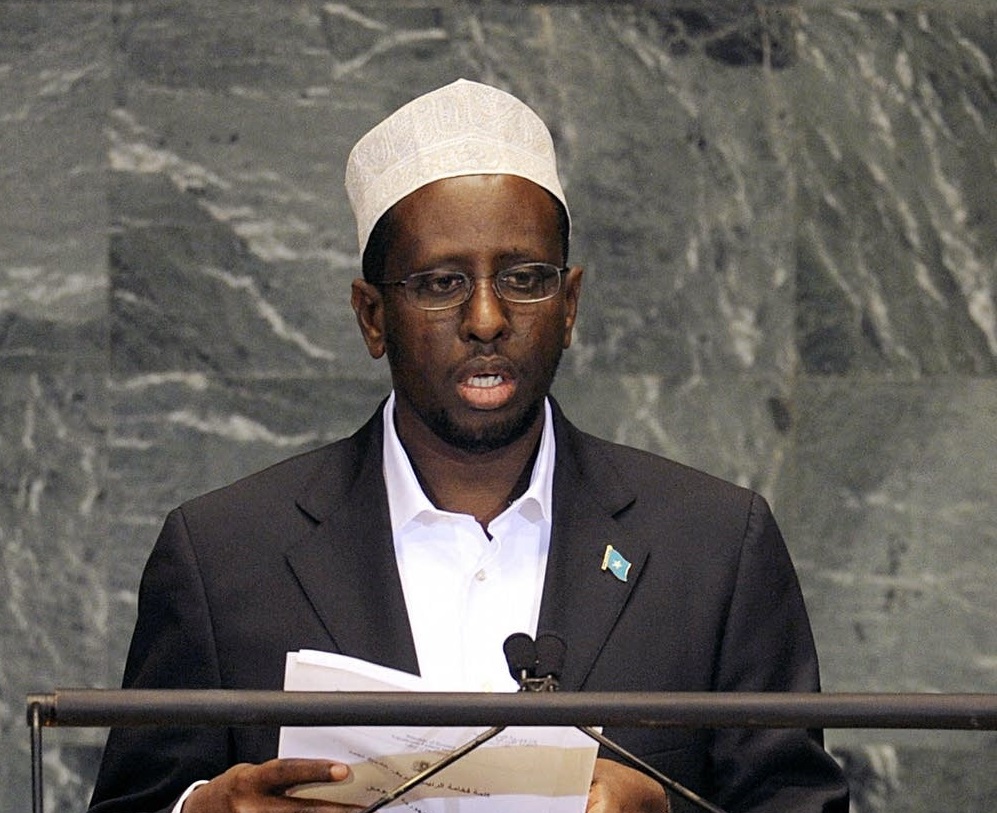
Sharif Sheikh Ahmed eventually emerged as the winning candidate and was elected president of the Transitional Federal Government. Before stepping fully into national politics he had been widely known as a figure connected to the Islamic Courts movement and later as a participant in negotiations aimed at bringing moderate Islamist leaders into the political system.
His election signaled a clear shift in Somalia’s political landscape. Choosing a leader associated with the moderate Islamist current suggested that parliament was trying to build a broader governing coalition rather than continuing the earlier pattern of narrow political blocs.
Formation of a New Political Agenda
After the presidential vote the conversation moved almost immediately toward the next stage of governance. A new administration needed to be assembled. Cabinet positions had to be negotiated. Ministries required leadership and coordination with the expanded parliament.
During the final days of the month Somali political figures debated the shape of the future government. Some discussions focused on the balance between regional and national representation. Others revolved around how ministries should be structured or which political factions should hold particular portfolios.
Not everything was settled right away. Somali transitional politics rarely produces clean organizational charts overnight. Still, the election of a new president created a focal point — something around which the evolving political system could reorganize.
Mogadishu in the Context of National Politics
Even though many formal decisions were made outside Somalia during this transitional period, their implications were always tied back to Mogadishu. The capital remained the symbolic and administrative heart of Somali governance.
Any change in leadership or parliamentary structure eventually shaped how authority would be exercised in the city. Government ministries, administrative agencies, and diplomatic missions connected to the national government were expected to operate under the authority of the newly elected president and the expanded parliament.
For observers following Somali politics, the political developments of January marked the beginning of a new phase in the country’s transitional system. Whether that phase would stabilize governance or simply produce another round of political negotiations — well, at the time nobody really knew.
Summary
The political news of the month unfolded as a sequence of institutional changes rather than a single turning point. Implementation of the Djibouti political framework, expansion of the national parliament, the departure of President Abdullahi Yusuf Ahmed, and the election of Sharif Sheikh Ahmed together reshaped Somalia’s transitional political structure.
For Mogadishu this period opened the door to a new political chapter. National leadership, parliamentary representation, and the structure of government were all shifting at once as Somali leaders attempted — again — to rebuild functioning state institutions.